Showing posts with label Nashville Warbler. Show all posts
Showing posts with label Nashville Warbler. Show all posts
Saturday, April 18, 2026

Sunday, May 7, 2023
Monday, November 7, 2022
Saturday, September 11, 2021
Saturday, September 4, 2021
Saturday, November 21, 2020
Saturday, November 14, 2020
Saturday, October 31, 2020
Friday, October 23, 2020
Saturday, September 19, 2020
Sunday, November 3, 2019
Sunday, October 20, 2019
Monday, October 7, 2019
Sunday, September 8, 2019
Tuesday, September 25, 2018
Oklahoma Migratory Species Profile: Nashville Warbler
A small plain, short-tailed warbler, with complete eyering, the Nashville Warbler is generally uncommon. It breeds in both the northern and western parts of the US, as well as southern Canada. It does not migrate far, still enjoying a small part of the US in California and Texas, as well as Mexico and northern Central America. They do not migrate across the Gulf of Mexico as many warblers do.
This bird was found by ornithologist Alexander Wilson near Nashville, Tennessee in 1881, and was aptly named as a bird of the eastern part of the country at that time. It's climatic range is sending it north.
This common summer resident of the eastern US is closely related to the Orange-crowned Warbler.
Occasionally, one may be so lucky to see the red crown patch in both sexes, but it is even more rarely seen in the female of the species.

Nashville Warbler
Boomer Lake Park, Spring 2017
They will be found in mixed species flocks during migration, as many warblers tend to be observed. During fall migration, they can be found low as opposed to the spring and summer, when they are found higher in hardwood trees. They are insectivores, enjoying caterpillars, beetles, flies, etc.
There are two distinct populations, which include the Western breeding subspecies (or Calaveras Warbler, which is duller colored) that wags its tail, and the Eastern, which does not. The species commonly migrates through Oklahoma in both the spring and fall, including the Panhandle.
They are seldom parasitized by the Brown-headed Cowbird, and are threatened by climate change.
This warbler is a ground nester, found under brushy vegetation or small trees.
Sunday, September 9, 2018
Sunday, May 7, 2017
May 2017 Has Started Out As the Best Spring Migration Over the Past Five Years

Least Flycatcher

Ditto

Forster's Terns

Orange-crowned Warbler

Greater Yellowlegs

Lesser Yellowlegs

Clay-colored Sparrow

Male Orchard Oriole

Least Flycatcher

Nashville Warbler

Scissor-tailed Flycatcher

Black-crowned Night-Heron

Cedar Waxwing

Green Heron

Canada Gosling

Ditto

Great Blue Heron
05-02 through 05-06-17
Cedar Waxwings have arrived to take advantage of buds, fruiting flowers, and the multitudes of
mulberries, which have begun ripening. I know this, as I have been watching the berries and actually ate a couple of them right beside some Yellow Warblers. Another tidbit for you is that mulberry bushes become mulberry trees in just a few short years, which is why you can get hordes of fruit-
eating birds. Try it and you'll see for yourselves when you have an increase in waxwings and warblers. Since the Middle Atlantic and a few northeastern states are still on the chilly side, some of
these birds have been with us a little longer. Our mornings have still been a little cooler than normal, but I just as soon have these photo opportunities as long as possible. Not only that, there is a remote
possibility that if these birds are held up too long, they might just decide to start breeding here.
Monday, which was May Day, was the coolest morning of the week, which we touched on last photo posting, and that was a relatively good morning for migratory birds. Thursday the 4th was an outstanding morning. I believe I had 62 species on that day, and they were practically dropping out of the trees. Warblers were quite plentiful, Clay-colored Sparrows were everywhere, and shorebirds were still enjoying puddles, especially the Greater and Lesser Yellowlegs.
Our first empidonax flycatchers, the Least Flycatcher, was plentiful and a allowing for some excellent photo ops. A juvenile Black-crowned Night-Heron rested for a short time at Heron Cove. This bird wasn't driven out like an adult would be. It wasn't seated far from a breeding aged Green
Heron, as a matter of fact.
Birding was still good, but slowed up a little at the end of the week, but there were a few good things
that still came along, like three Red-headed Woodpeckers at Boomer Creek, one of which managed to grace Boomer Lake proper, and we have a pair of beautiful Great-crested Flycatchers eying the largest snag on the north end of the lake. They lost the thinner snag at the wood's edge last year, but I'm pleased to note that they were not deterred by that.
We have peaked with eight Forster's Terns for the past several days and there are still plenty of Franklin's Gulls passing through the area.
Our Bell's Vireos have also returned to their nesting grounds in our area, and one is already courting
a young lady...
Due to the fact that conditions have been quite good this spring with plenty of water, there is plenty of food for the birds, and we should have a wonderful crop of rough leafed dogwood berries in short order for discriminating palates. Migratory action is still going on, so keep your bins and spotting scopes handy and see what else we can find in Payne county during the spring of 2017, which is the best conditions that I have noted over the past five years.
Sunday, October 11, 2015
Migratory movement is Still Medium-High

Male American Kestrel

Immature Blue-winged Teal

Migratory American Avocets
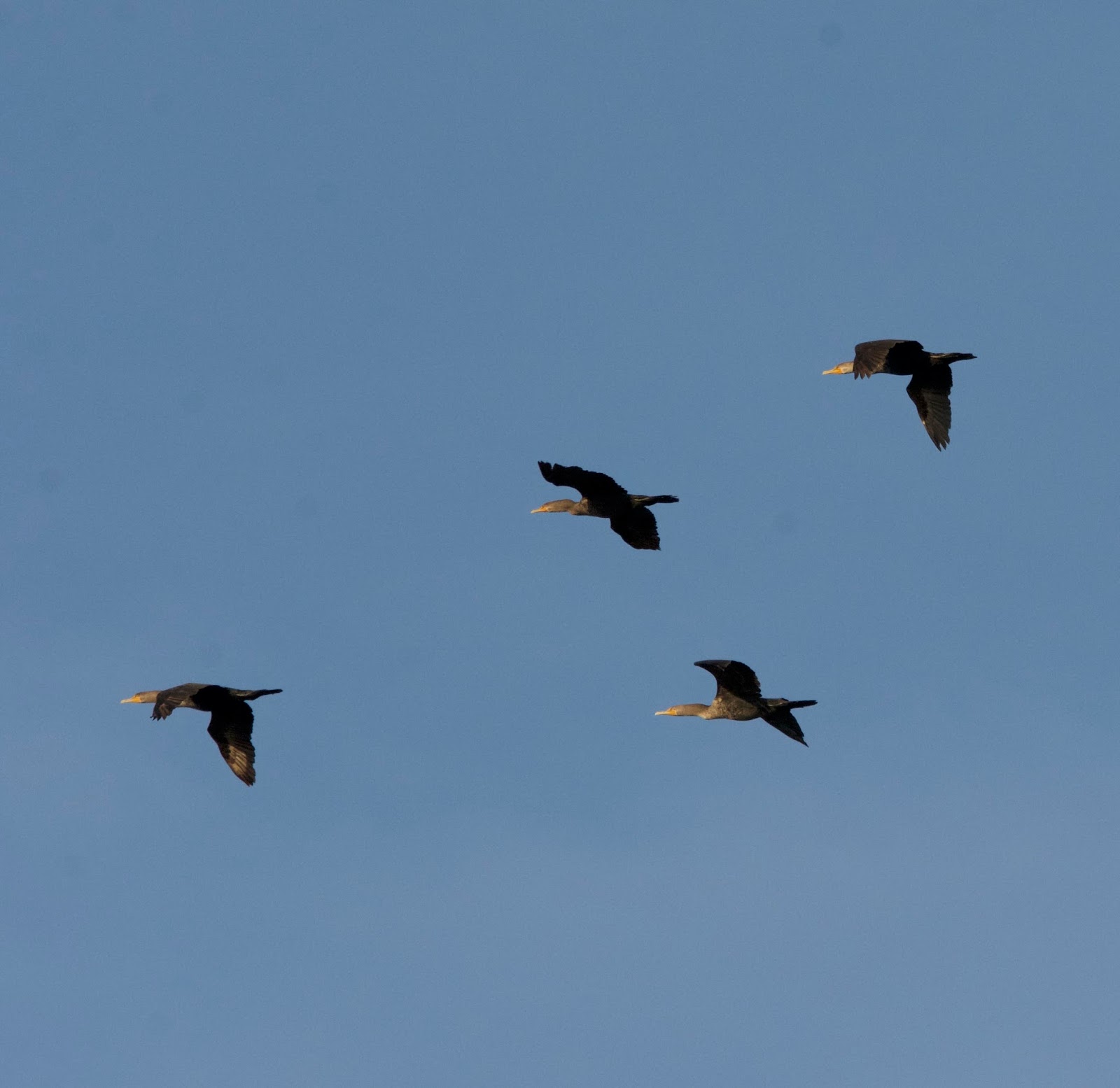
Migratory Double-crested Cormorants

American Coot

Immature Great Blue Heron

Tufted Titmouse
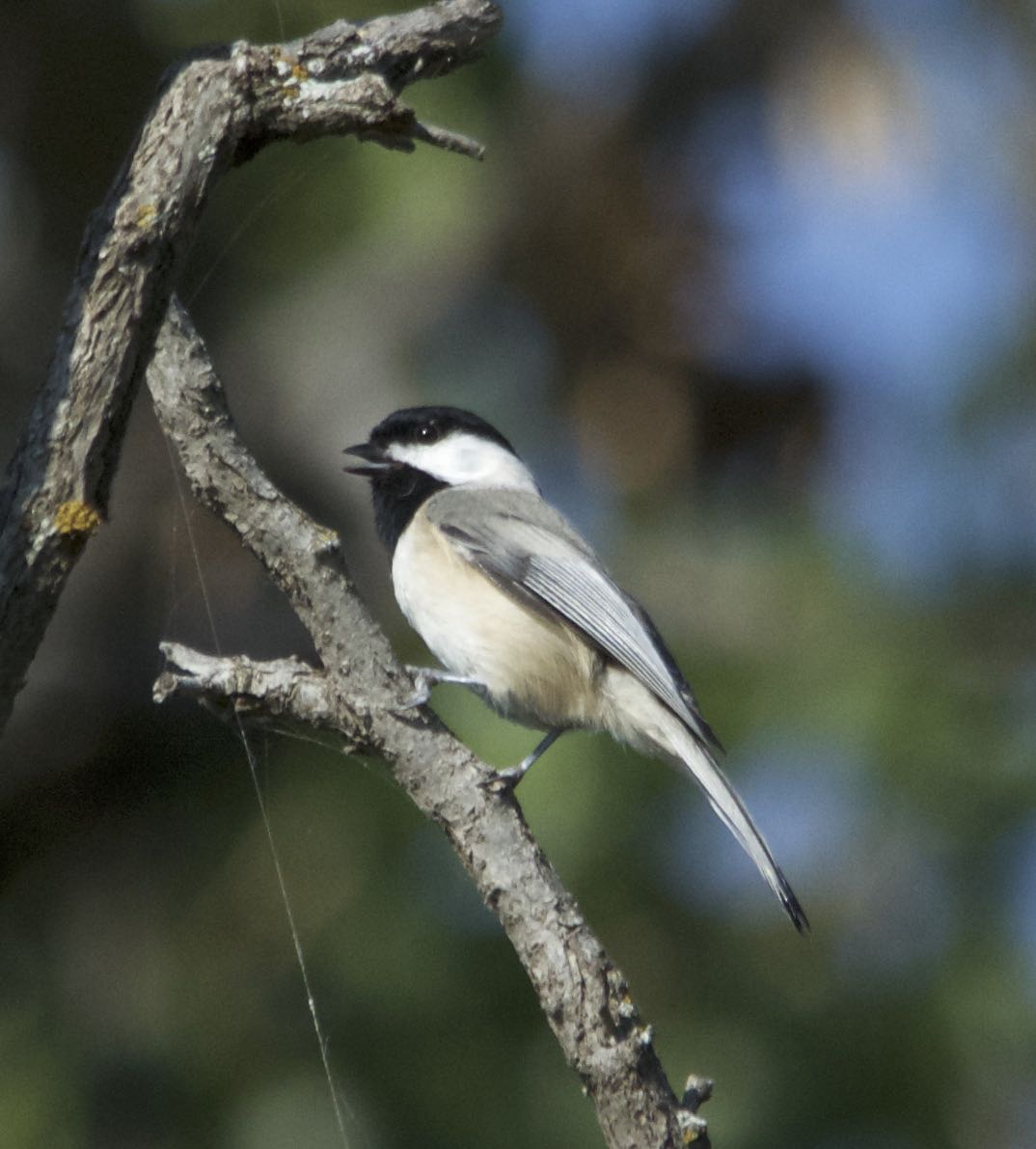
Carolina Chickadee

Double-crested Cormorant

Nashville Warbler
56-77 degrees F/0730-1050 hrs./clear skies/15 mph wind gusts
Migratory movement is medium high with a great deal of guests gracing our skies. Hawks
are also moving through the area, yet we still have plenty of resident birds. While looking
at a large group of Turkey Vultures, my attention was drawn even higher by my binoculars to
discover a Broad-winged Hawk, which is relatively rare in this area. What few birds are left
won't be around too much longer, yet we still have some oddball stragglers still coming through
the area like Bell's Vireo, the Orchard Oriole, Dickcissel, and a few others still winging their
way south. There are even a few earlier arrivals, and this year, nothing will really hold true to
form. There will still be plenty of activity that awaits, and many more birds yet to arrive, so
sit tight and enjoy the migratory ride.
Subscribe to:
Posts (Atom)