Showing posts with label Least Flycatcher. Show all posts
Showing posts with label Least Flycatcher. Show all posts
Monday, September 11, 2023

Sunday, June 11, 2023
Saturday, May 21, 2022
Saturday, September 18, 2021
Saturday, September 11, 2021
Sunday, June 6, 2021
Saturday, May 29, 2021
Wednesday, May 26, 2021
052621 Spring Into Spring with Our Green Heron First Family

043021 Carolina Chickadee
This little beauty was out with its mate, checking for a nest cavity. Writer had seen where it was contemplating nesting, though a Downy Woodpecker was trying to usurp the same area even if it was much larger than the chickadee. The Downy's size was much too great for the thin snag.

050821 Red Eared Slider

This lovely was close to shore, but it was easy to stay covered by leaves to get this shot and remain hidden to the subject.


American Avocet


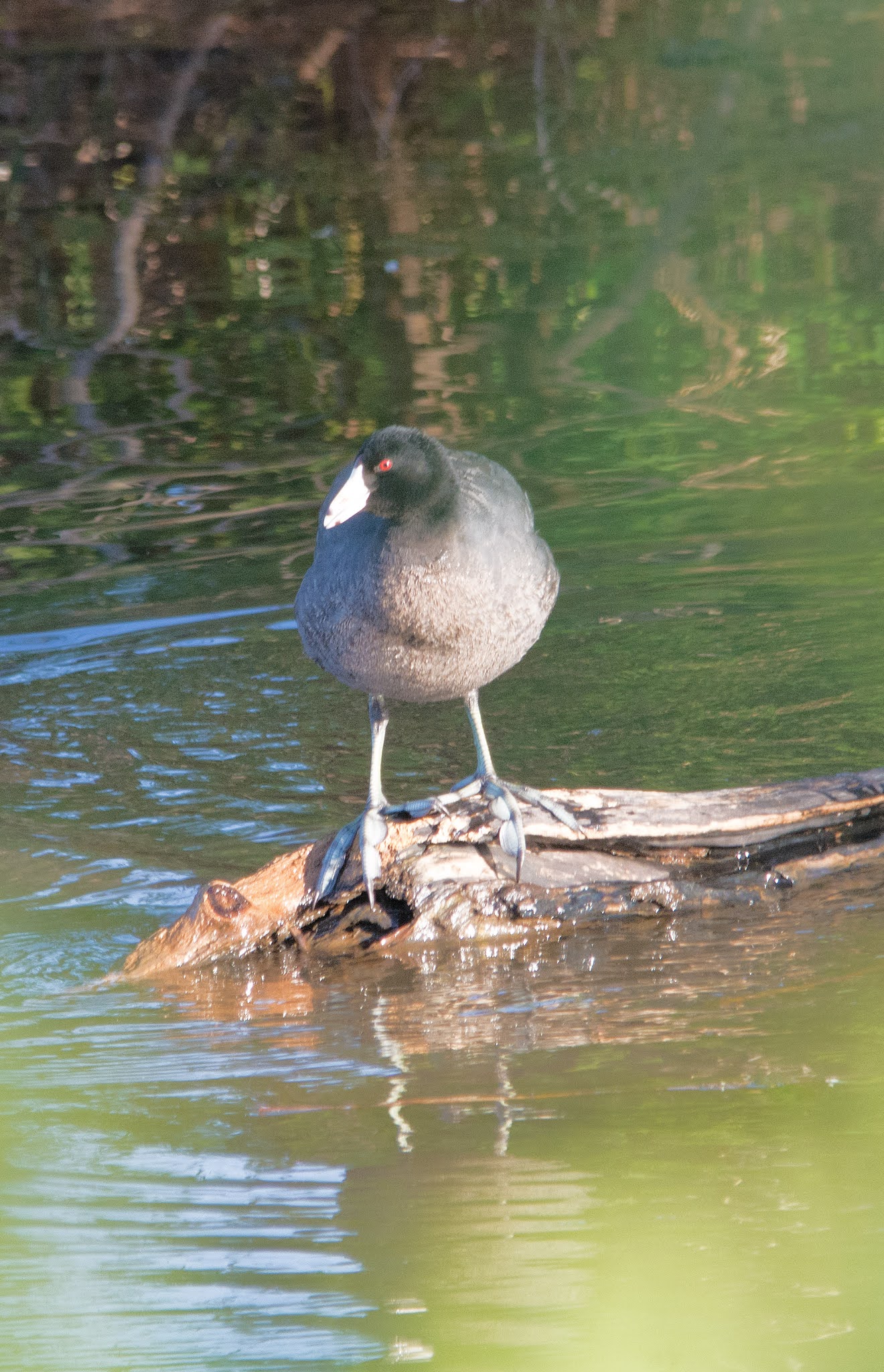
051421 American Coot
Even though morning had been broken, the area coots didn't mind being observed. Look at those unusual lobed toes that are so well adapted to uneven surfaces!

051521 Canada Goose (Gosling)
Knowing a kid's parents will get you right in the front row to photograph the youngster.

Clay Colored Sparrow
This slightly wet all-star was with roughly eight other migrants and this one didn't mind being the center of attention.

There were eight sandpipers wheeling around the lake multiple times, which afforded this nice shot of a bird's-eye-view. How cliche, right?

052521 Least Flycatcher
Least Flycatchers are easy to shoot IF you see one. We were eye to eye.

Green Heron and Nestlings 1
One view of some of the first family of 2021.

Green Heron and Nestlings 2
View two with some of each bird in the photo.

Green Heron and Nestling 3
The other one must have ducked under the parent.
Saturday, May 16, 2020
051620 Storms to Yard Birds and Back Again

051420 Great Blue Heron
Shortly after writer was on the lake, it began raining to some degree, forcing me to believe that this would be a fast trip. The roiling clouds showed unsettled weather but it wasn't supposed to rain for an hour. Figuring that either the birds just arrived and came down or they did the night before, chances were good that there would be a few things on the lake. Not really so, other than several Snowy Egrets flying in the direction of the wind, away from the storm. Even Shorebird Jetty showed little for birds. The jetty was also very windy, beginning S-18, finally gusting to 31 mph. Batten down the hatches.
This Great Blue Heron landed upon Shorebird jetty while wind and rain were part of the general atmosphere. I observed the bird in what appeared like slow motion. Its wings were outstretched to keep if from being thrust into the forward-facing wind and it bounced as it came down. It was also at a run, rapidly slowing down to keep from going into the high water that was nearly lapping at the shores of the jetty, nearly cresting the land.
Several minutes of this and a northbound flying Great Egret made me wonder if we might not be soon heading for Kansas, but we remained safe. Needless to say, when the clouds parted, it was best to head back to base. The rain never stopped, even with the partly cloudy weather after the front went through.

051520 Least Flycatcher
It was not raining (yet), but it was warm and humid. Birding was better. Having found seven Franklin's Gulls upon the water, it was impossible to get good shots due to the darkness. A Bell's Vireo was heard north of where there was an adult last year prior to fireworks, yet it slowly made its way closer to The Cove, singing all the way. An American Redstart was briefly spotted and heard in the run of trees south of Bald Cypress Row. There were more birds there, but I was unable to hear or see any more. Swainson's Thrush was in the southern line of trees west of Bald Cypress Row in song, the tremolo effect just like the Veery and Song Thrush. The bird has a well developed syrinx, which makes its dual song similar to the double sound of a twelve string guitar. It sounds almost ethereal with the quality of reverberation. Since Swainson's had been in the area for the past two weeks, my curiosity had been piqued to hear its song, which finally happened for the first time today. It was worth waiting for. Also located was a male Common Yellowthroat and over two hundred Cedar Waxwings were heard in two hours. All they cared about was stripping mulberry bushes and trees of the ripe fruit, then they wafted away in song to seek more.
051620
Slightly cooler, mostly cloudy and a little rain opened the day at Boomer Lake. There was a high count of three Barn Swallows and six Cliff Swallows around the Lakeview Road Bridge. Three Carolina Chickadees, one parent and two immatures, were found on the north end of Heron Cove in the line of trees off the water at the bottom of the hill midway between The Cove and Shorebird Jetty, as was a Least Flycatcher. A female robin was coaxing her older immature down a Bald Cypress. There were five Spotted Sandpipers, a northbound Great Egret, a total of four Green Herons, one at The Cove and three more that may have come from Boomer Creek. Two out of the three soon returned north. Two Bell's Vireos were found, one just shy of Heron Cove and the other in the deciduous trees between the northeast jetty and Goose Island. Three male Eastern Bluebirds were hawking insects from the power lines while four or five Western Kingbirds filled the skies with boisterous activity. A conservative three dozen Cedar Waxwings were in search of breakfast all over the lake, likely many more. A male and female Orchard Oriole lay claim to separate territories, while a dozen Yellow Warblers filled the air with song, and a Turkey Vulture rode thermals alone.

051620 Immature Barred Owl

Tufted Titmouse
These above beauties were obtained through an invitation. An area resident though of writer today and wanted to share the immature Barred Owl, since I had never seen one. It was a wonderful afternoon as a result. The titmouse was a bonus, as were several other birds that I didn't photograph.
Monday, September 23, 2019
Monday, September 16, 2019
Boomer Lake's Soon-to Be Migrant and a Later Resting Migrant

Immature Mississippi Kite
082719
0805-911/76-77 F/variable to partly cloudy/N-8/81-80% RH/29.96-29.94 Hg and rising
This was about ten days before the kites left for their South American wintering grounds. My last observation of an adult was on 091019. Even at the time of this photo, this immature bird was still begging for food. The adults let it beg, as it was old enough to find its own.
Kites usually nest near or even have a wasp's nest within it, which could protect the young from climbing predators. Smaller birds also nest nearby and coexist peacefully. However, if one injects a human in the picture, the adult kites are very territorial with parental duties, and unless the person is wearing a hat, his scalp could well be scraped by those talons.

Great Blue Heron
090119
9745-0926-71-77 F/partly cloudy/E-1/84-83% RH/30.05-30.11 Hg and rising
This lovely adult in breeding plumage was on the last southern jetty just north of Goose Island. It calmly permitted this photo and with the backlighting, provided a nice accent.

Possible Least Flycatcher

View 2
09-01-19
0745-0926/71-77 F/partly cloudy/E-1/86-80% RH/30.07 Hg and rising
Definitive ID of this empidonax species was not possible, but it is believed that this is the Least Flycatcher. Most adults in fall are silent, but it would give occasional "piks."
Sunday, September 15, 2019
Sunday, June 9, 2019
Saturday, June 1, 2019
2019 Green Herons and Nestlings in the 'Hood

Scissor-tailed Flycatcher
Oklahoma State Bird

Least Flycatcher

Domestic Ruddy Shelduck
This beautiful bird is called an exotic in the United States, but it is a native of Eurasia. Shockingly, it looks like a duck, but sounds like a goose and tends to hand around with our Canada Geese. The Ruddy Shelduck has been in the area over a year. It tends to get lonely during breeding season, and parent geese shun it, as their job is to protect their young from predators, at all costs, even if this beautiful duck is a friendly sort.
05-26-19 Continuation

Adult Green Heron Feeding Four Nestlings

Female Green Heron Brings Up the Rear
Guard Duty For Predators

05-27-19
0715-0811/75-76 F/mostly cloudy/SSE-12 to S-16/79% RH/29.95 Hg and falling to 29.94 Hg and steady
Day 3 with our Green Heron nestlings in sight. They could well be older, just not have been big enough to be seen at the nest. Parents stay very close at this stage. When one is procuring food, the other will be on or near the nest.

05-28-19
0725-0837/74-77 F/variable clouds/S-17/79-78% RH/29.74-29.75 Hg and falling
Day 4 with nestlings in sight.

Green Heron Nestlings #1

#2

#3

#4

#5

#6

#7

#8

#9

#10

#11

#12

#13

#14

#15

#16
05-30-19
0711-0830/62-68 F/clear/87-79% RH/29.94 Hg and steady to 29.99 Hg and rising
Day #6 with Green Herons growing well and quickly. They have crowded the parent out of the nest and don't like being too contained. They know when dad arrives with food and are very attentive. This was also the day that we discovered that we didn't have four nestlings, we had five. Look closely and you will notice that fact, as well.
Bell's Vireo seems to have moved into the area, too. I believe this singing male was the former bird that had territory running across the lake from the east to the west side.
Heron Cove is turning into a very productive area that had swamp habitat during the excess rain, which drew a good number of neotropical migrants. There is still a bit of swamp area left, but most has receded. No waterthrush has been seen yet, but the habitat is quite appropriate.
Brown Thrashers are also nesting at Heron Cove, as well as the Warbling Vireo, Northern Cardinal, and a pair of Eastern Kingbirds recently paired here.
Sunday, May 27, 2018
Saturday, May 19, 2018
Boomer's Best For Spring Migration 2018

Male Bell's Vireo

Male Orchard Oriole

Female Summer Tanager

Lincoln's Sparrow

Mallard First Family 2018

Neotropic Cormorants

Common Yellowthroat

Green Heron Adult

Least Flycatcher

Brown Thrasher

Eastern Kingbird
May 2018
No sooner did I return from southeast Arizona, sleep overtook for a few hours, then it was back at
Boomer Lake to record summer residents, as well as neotropical migrants.
Fortunately, we have had a good showing for the migratory season. We will still gain a few birds, lose a few birds, and perhaps get some surprises as a result.
I'm sure that the Neotropic Cormorants are breeding somewhere nearby, but as yet, the mystery
remains unsolved.
Since our Green Herons set up a little early, perhaps an early clutch or two will be in order.
Even though spring migration will be slowing down for a while, there are bound to be a few more
late adventurers. Stay tuned for more news as it breaks.
Subscribe to:
Posts (Atom)