Showing posts with label Dickcissel. Show all posts
Showing posts with label Dickcissel. Show all posts
Saturday, September 12, 2026

Saturday, April 27, 2024
Saturday, September 3, 2022
Saturday, October 24, 2020
Sunday, October 13, 2019
Sunday, September 15, 2019
Sunday, August 4, 2019
Birding On a Shoestring: Cheyenne Bottoms Preserve

Female Dickcissel

Male Dickcissel

Bank Swallows

Grasshopper Sparrow 1

Grasshopper Sparrow 2
072819 early to late morning
The following morning we took a jaunt to the Nature Conservancy's Cheyenne Bottoms Preserve, which was a prelude to Cheyenne Bottoms.
The Preserve includes 7700 acres, which has some shallow marshes less than a foot deep, deeper marshes up to several feet, and some priceless tall grass habitat.
Many of the birds observed were the Red-winged Blackbird, Dickcissel, Western Meadowlark, Blue-winged Teal, Red-tailed Hawk, and the ubiquitous White-faced Ibis. Around the reservoir were large numbers of Bank Swallows and Great-tailed Grackles, all seeking insects.
Many areas like these are usually closed to the public, so this wonderful find was a treasure to traverse for the morning.
for more on the adventure:
https://debhirt.blogspot.com/2019/08/birding-on-shoestring-quivira-national.html
https://debhirt.blogspot.com/2019/08/birding-on-shoestring-cheyenne-bottoms_5.html
Saturday, May 25, 2019
Pre- and Post Flood Natural Birding Wonders

Dickcissel
051919
One of many of these birds found at Sooner Lake. This was one of the few days that it didn't rain, providing a wonderful day birding.

Swainson's Thrush

Savannah Sparrow
052319
This was a couple of days after the flood. This beautiful Swainson's Thrush sat out in the open in the current swampy area, where I also located a late-migrating Rose-breasted Grosbeak, a singing male Common Yellowthroat, and both Alder and Least Flycatchers.
The Savannah Sparrow is known as a later sparrow migrant, providing a couple of nice shots in a drier area.
The lake had receded slightly, but it still was not completely back within its banks.
Sunday, August 5, 2018
Oklahoma Breeding Bird Species Profile: Dickcissel
Sparrow-like, thin, and sleek, this passerine of the tallgrass prairies can flock with House Sparrows out of breeding season. They are insectivores and seedeaters that enjoy fallow fields with scattered trees, shrubs and hedgerows. The male will often sing atop fleshy plants and tall weeds, which makes his presence quite noticeable.
A summer resident of the Great Plains and Midwest, and scattered eastern and southeastern parts of the US, many are acquainted with the sound of "dick-dick-ciss-ciss." This handsome bird is attracted by forbs, alfalfa fields, timothy grass and similar weeds and plantings. Surprisingly, it is polygynous, but may also be quite monogamous. Other than provide sperm, the male does little else, other than find a second mate to procreate the species. The Dickcissel may nest upon the ground or in a sapling, whatever suits it during that stage.

Male Dickcissel
The biggest attraction for this bird is extensive grassland, which tends to vary on a year-to-year basis, depending upon weather conditions. In drought years, they will come north more often, and conversely, they will remain in southern Texas during rainy breeding seasons. This practice also occurs on the wintering grounds, which can also markedly vary. They are generally an agricultural pest in their winter range, and have been poisoned as a result. The birds will flock before migration, much like Purple Martins, Scissor-tailed Flycatchers, etc., creating a very large and often noisy group.
Unless we propagate more grassland, this bird will lose population and turn into an extirpated species if we allow it. Since these things can rapidly occur, it is in our best interests to do what we can for the species, like eliminate pesticides. Neonicotinoids can and will be a rapid negative effect for other grassland birds, namely the Bobolink, as well as many other pollinator species. This bird is seeking out what can be turned into grasslands in the northeastern part of the country according to eBird numbers.
Thursday, April 30, 2015
Birding On a Shoestring: High Island Texas Boy Scout Woods

Male Rose-breasted Grosbeak

Immature Summer Tanager

Green Heron

Male Baltimore Oriole

Dickcissel

Turkey Vulture

Eastern Meadowlark
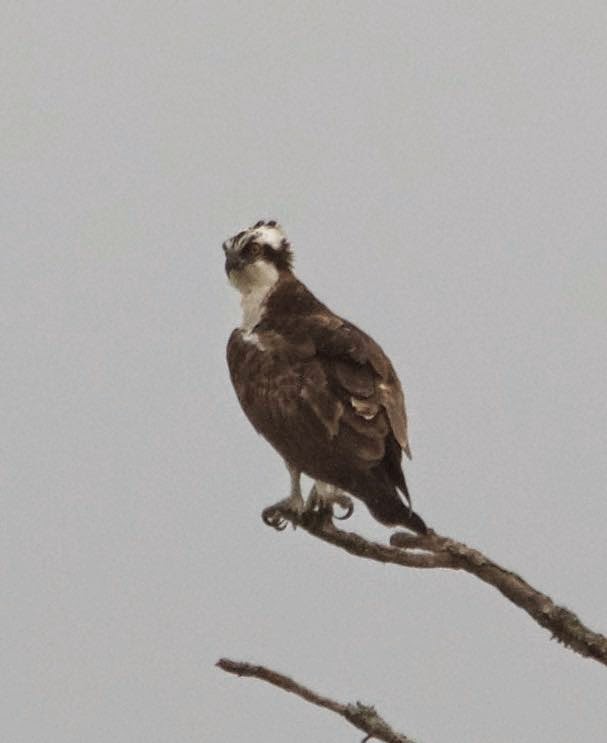
Osprey

Loggerhead Shrike

Snowy Egret with Crawdad

Pied-billed Grebe

Red-winged Blackbird

Common Gallinule(Moorhen) Fight

Male Yellow Warbler

Barn Swallow

Male Orchard Oriole

Magnolia Warbler

Ditto

Black-throated Green Warbler

Magnolia Warbler

American Redstart

Ditto

Ruddy Turnstone

Lesser Nighthawk
Once in a while, one has to make exceptions and take photographs on a cloudy day, or have
no remembrance. I chose to make these photos available to you, because they are still very
important records of events. However, I believe that I have made up for those with some of the other pictures, especially with fallout #2, which starts with this beautiful array of photos. Some of these
birds I never saw until these shots were taken. Ride with me on this magical tour.
Subscribe to:
Posts (Atom)