Saturday, July 19, 2025

Saturday, June 7, 2025
Wednesday, May 24, 2023
052423 Birding On a Shoestring: The Joys of Ohio, Michigan, and Magee Marsh Vicinity, part 2

052423 Virginia Rail

Prothonotary Warbler
This individual was all over the place and came very close to people out in the open.

Philadelphia Vireo
This vireo was in the area for a good twenty minutes out in the open so that everyone could get a good view. Writer was secretly hoping to get a picture of one of these.

Eastern Screech Owl
For once, no screech owl in a nest box for me. It is preferred to get them out in the open and that chance came.

Bald Eaglets with Parent on Right
There were three eaglets in the nest. The third was in the rear flapping its wings, and it appears that it will fledge later today or tomorrow. Eagles usually only sire three birds when there is plenty of food. See the parent out of the nest on the right? I believe there were three nests that I saw on this trip, which is quite a few.
Not bad for only four days in the field between the two postings. The birds moved fast and there were a lot more, but it was impossible to get them all. That's what a next time is for!
Sunday, July 3, 2022
Sunday, June 5, 2022
Monday, October 25, 2021
Sunday, August 25, 2019
Sunday, July 21, 2019
Monday, August 20, 2018
Oklahoma Breeding Bird Species Profile: Prothonotary Warbler
Tsweet-tsweet-tsweet-tsweet-tsweet-tsweet-tsweet!
These sounds are familiar in wooded, tick infested swamps with a creek or standing water. It is a clear, metallic song, and you should be able to observe this beauty, close to eye level once it gets to know you.
The male has a bright yellow head and breast with steel blue wings and black eyes and bill. The species was named after Catholic clergy due to its primarily yellow attire.
A cavity nester, the pair will flit in and out of the old woodpecker hole that they have chosen, which is anywhere from seven to eighteen feet almost directly over the water. When it is nearly May in Oklahoma, one waits with bated breath for this beautiful bird.
A New World Warbler, or wood warbler, the prothontary is an insectivore, and he will build several incomplete nests, while the female opts to build the real nest. The birds favor insects and snails, which is why they are in favor of living by water, which tends to attract both of those food sources. They will also eat seeds and rely on nectar, if necessary.

Male Prothonotary Warbler
Red Slough, 2016
One of two cavity nesting warblers, it is often a victim of Brown-headed Cowbird parasitism.
These birds will use nest boxes, an old rural mailbox placed in or by the water, as well as old Downy Woodpecker cavities, and is often in the same area as other species of concern, namely the Yellow-billed Cuckoo and Red-headed Woodpecker. They winter in mangrove swamps and lowland forests of creeks and streams in Central and northern South America.
This photograph was taken after trying to obtain one for a couple of years. The bird was practically two feet away from my knees, perched over standing water in a swamp. It had been calling to me, but due to the darkness, I was unable to see it at first. It patiently waited while I got my shots, then returned to the nest cavity, not far from where I was standing. It was worth the eight ticks to finally get this picture.

Male Prothonotary Warbler
Boomer Creek, 2017
Sunday, June 11, 2017
Nature At Its Best at Boomer Lake and the Creek
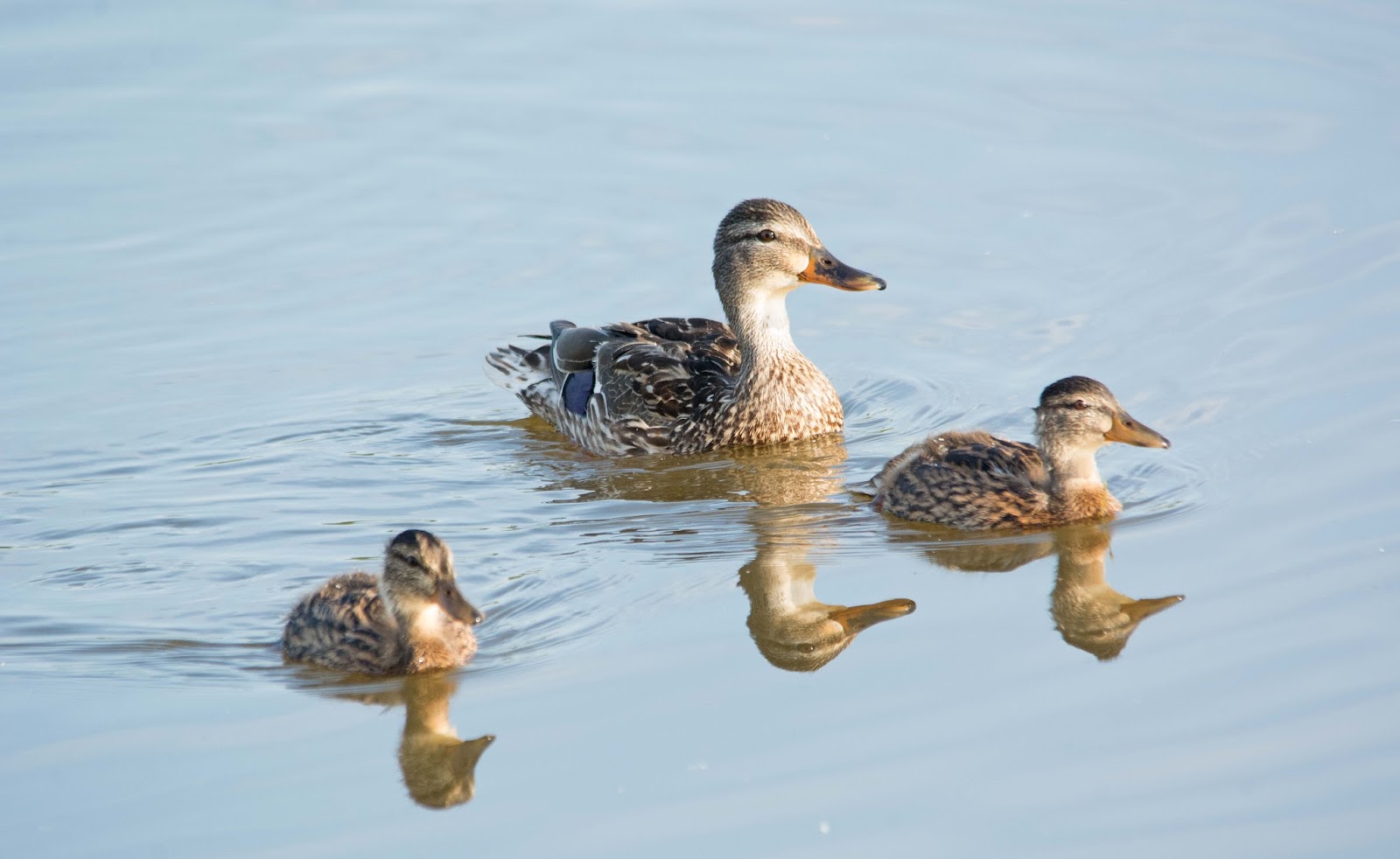
Mallard and Ducklings

Green Heron on Nest

Scissor-tailed Flycatcher

Snail

Red-winged Blackbird

Another Mallard with Ducklings

Fungus in Dead Tree

Green Herons Switch Nest Sitting

Prothonotary Warbler

Ditto
Week of 06-05-17
I don't want to jinx it, but it appears that our fearless Green Herons might have young this time.
Even though we have blowing willow leaves and branches in the way, I might have seen three little sleeping forms in the nest today, while the pair was off foraging for food.
There are also plenty of young Mallards on the water of both Boomer Lake and Boomer Creek, and naturally our Canada Geese have reared plenty of young, as well.
Now we are seeing young of nearly all shapes and sizes that belong to nearly all the area birds, and I will try to get photos of some samplings, as I am able to do so. There were several young robins observed this morning.
Boomer Creek has been giving us beautiful things, mostly nature related, but I also finally managed a
couple of halfway decent shots of a Prothonotary Warbler. Since the birds always seem to be in the same general area, I have also been looking for the nesting cavity. I believe that I have found the tree, but I don't want to appear too interested, as it could make the pair fearful. After all, I have had the good fortune to photograph one or both of them, so I cannot complain.
Here's to the week ahead!
Saturday, May 27, 2017
There Is Plenty of Light on Boomer Lakefront

Yellow-billed Cuckoo

Green Heron Pair

Green Heron

Female Orchard Oriole
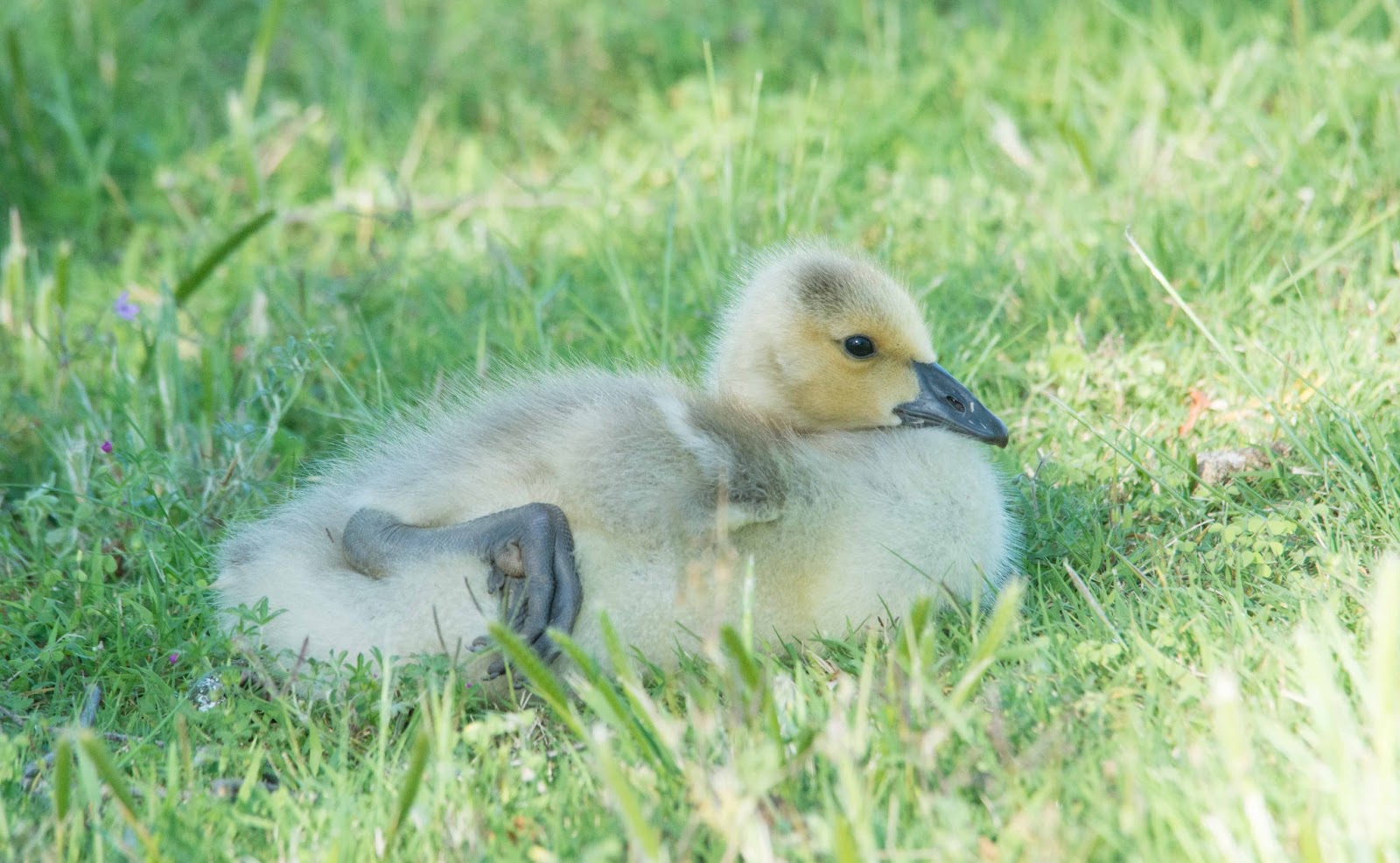
Canada Gosling

Least Flycatcher

Female Orchard Oriole

Ditto

Great-tailed Grackle

Female Red-winged Blackbird

Great Blue Heron

Prothonotary Warbler

Scissor-tailed Flycatchers

Green Heron on Nest

Male Orchard Oriole

Least Flycatcher

Great Blue Heron
05-22 through 05-26-17
This was an impressive workweek, as far as I am concerned. The trumpet vine bush on Boomer
Lake's east side is nearly in full bloom, which invited the Orchard Orioles that nest nearby to partake.
They have nested in the area for years, most likely because this bush exists there, as well as the fact that their site is in the willows by the water, which really attracts a number of good birds to its habitat.
Another wonderful piece of habitat is Heron Cove and the surrounding area, which has native trees, mulberries, and plenty of wetland habitat, which attracts my beautiful Heron colony. Right now, there are two pairs of Green Herons there, which perturbs my Great Blue Heron. He just doesn't have the freedom to come and go as he pleases, but he really does accommodate his Green Heron cousins quite well.
Our usual suspects also enjoy the area, which includes the grackles, blackbirds, warblers, flycatchers, warblers, and when in the area, the catbirds.
Boomer Creek also has dense habitat for those birds that prefer those kinds of areas, like the breeding birds, the shy Yellow-billed Cuckoo, this year's first Least Bittern, and a good group of migratories when they come through.
There are still a few more photos in the camera, which I will save until a later date. These include a few that are a bit on the unusual side, but I'm sure that you'll be pleased.
Until then, enjoy your own private birding areas, and as always, let me know what you are observing.
Friday, May 26, 2017
The Beauty of Boomer Lake, Starring the Migratory Black Tern

Black Tern

Black Tern

Ruddy Shelduck x Domestic Variant

Black Tern

Brown Thrasher

Prothonotary Warbler

American Goldfinch

Least Flycatcher
05-20 (Saturday) and 05-21-17 (Sunday)
Last weekend provided a small push of migratory birds with a minor low pressure system coming through. With it, came the largest amounts of Black Terns that have graced Boomer Lake. I believe the high count was thirty-five terns. It was no easy task, but I managed a few decent shots. These terns were a lot faster than the usual local birds, which provided some good practice on how to photograph them.
These terns tend to migrate through the North American interior. In summer, they tend to become marsh birds and in winter, graces both Central and South America as coastal seabirds. These birds forage for insects on the wing, dipping to the water to also glean fish from the surface.
Also in the background was another Ruddy Shelduck, much more of a mixed domestic than the last one. This bird was also a wild bird that had reverted from its original domestic state, as can be observed above.
Birds are with young at various stages. The first parent birds are the Canada Geese and Mallards, followed by the American Robin and Mourning Dove, then the grackles and Red-winged Blackbirds.
Our Green Heron family is sitting on a nest or two.
Boomer Creek should soon have young Blue-gray Gnatcatchers, Eastern Phoebes, assorted Woodpeckers, and Prothonotary Warblers, to name just a sampling.