Showing posts with label Northern Flicker. Show all posts
Showing posts with label Northern Flicker. Show all posts
Monday, January 24, 2022

Sunday, February 7, 2021
Sunday, December 20, 2020
Sunday, December 6, 2020
Thursday, December 3, 2020
Wednesday, July 22, 2020
Thursday, June 4, 2020
060420 Different Birds, Different Responsibilities

060320 Northern Flicker
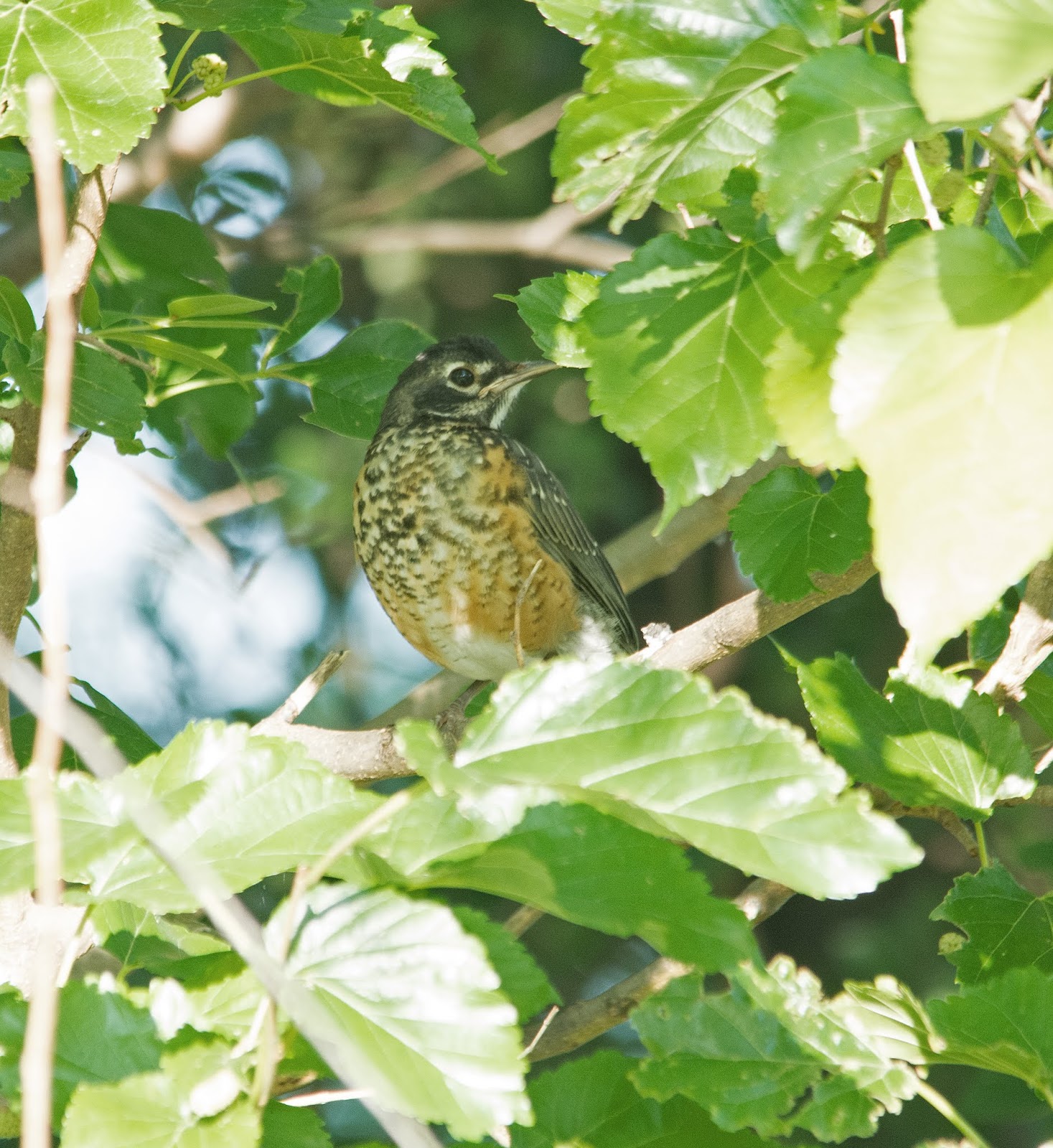
Juvenile American Robin

060420 Great Crested Flycatcher #1

Great Crested Flycatcher #2
Migrants have come and gone for the moment, but raising young is still on the minds of those that are breeding in our presence. It is just as intense to raise as many young birds as possible and the adults are doing everything in their power for them, just like we do.
Many similarities can be noticed, except for the cash outlay, but the investment of any animal is their intense struggle to be successful. Does that sound familiar?
So, writer urges everyone to be just as supportive in their work, as well as backing their needs for habitat, nourishing food and clean water, just like we ask as a basic right.
Sunday, March 15, 2020
Sunday, January 26, 2020
Wednesday, May 22, 2019
Storms of 2019 Flood Boomer Lake and Beget Shorebirds Galore

Hooded Merganser (Right)
Ruddy Duck (Left)

Female Hooded Merganser

Ruddy Shelduck

Willow Flycatcher

White-rumped Sandpipers

White-rumped Sandpiper

Semipalmated Sandpiper


Ruddy Turnstone ( Center of Group)

Franklin's Gull (Center)

Black Tern

Franklin's Gull (Bottom)

Forster's Terns
052119
0855-1012 hrs/65-66 F/mostly cloudy/89% RH--shortly after heavy rain stopped
A few dozen Canada Geese were in the arms of safety on the southeast corner of the our beloved Boomer Lake with low areas growing in size with water, which had two or three Mallards swimming within. Three Great Blue Herons were seen in transit from all directions.
Beloved Boomer was flooded to the mow line and police units were out to deter traffic in flood areas on the west side. Heron Cove was my biggest worry, with the Green Heron nest just over the water and in full view.
Relaxing a little when I observed Mother Heron upon her nest, fast asleep, wet and bedraggled, the stick fortress was sinking lower just above water. Two Willow Flycatchers were heard on the Cove, one safely hidden, yet obviously fearful and calling from the mulberry bush at The Cove. On the west side of Heron Cove was a female Hooded Merganser near shore with a sleeping Ruddy Duck. A Baltimore Oriole was in attendance, along with plenty of Great-tailed Grackles, a Common Grackle, and an Eastern Kingbird could be heard, while a Brown Thrasher was atop the trees, having taken sentry duties. A yellow-shafted Northern Flicker always seemed to be foraging in front of me, always just ahead to pave the way.
At least one southwest jetty was nearly covered by water, yet the southeastern jetty was close to the same with a twelve-foot span toward the end of the cove submerged. Franklin's Gulls could be observed, giving writer a good idea that there were shorebirds there.
On the way to the southeastern jetty, several familiar areas were choked with excess water with at least two more Willow Flycatchers flitting about in a normal nervous manner. All birds were doing their best to stay above the rushing water line. Mourning Doves were performing their plaintive wail atop the new power lines. Ducks, both wild and domestic, and Canada Geese were going about their business foraging in wet grass.
Rounding the corner to reach the jetty, a friend was scoping the area. He had come up with most of the photographed birds. While we inched closer to these birds, he was walked beside me, telling me what he had observed. We both continued to get as close as possible without driving the shorebirds and gulls away. Upon approach, Black Terns were flying by closer than I had ever seen them, allowing wonderful observation of behavior.
The real question was nearest the bench at the end of the jetty, breached by several feet of standing water. Was there a Common Tern among the Forester's Terns? It turned out to be a false alarm, but this was a fabulous search for shorebirds, some of which I had never before seen in Oklahoma.
My standing joke has always been that birds that have never been here eventually come to see me and they Payne County list grows.
Saturday, September 17, 2016
The Heroes of the Boomer Lake Brigade

2nd Summer Black-crowned Night-Heron

Green Heron

Ditto

Black-crowned Night-Heron

Immature Yellow-shafted Northern Flicker

Great Blue Heron in Flight

Red-winged Blackbird

Great Egret
09-05 through 09-13-16
This is an assortment of some of the temporary residents who will likely be migrating out of
here this fall. We are in the middle of migratory activity, some light, and sometimes with moderate numbers.
There is a fairly heavy population of water birds and this has been an excellent year for Green Herons, yet many of the other herons have and will show themselves in smaller numbers.
It is still a pleasure to have the sub-adult Yellow-crowned Night-Herons at Heron Cove, and the
area has been a valuable respite and resource for many others of the heron clan.
Red-winged Blackbirds, Scissor-tailed Flycatchers, and Eastern Kingbirds are still roosting. Both
the kingbirds and flycatchers are tyrants, so it makes sense that they will travel south together.
It is always a sad time to see them leave, but they always return the next year.
The weather wasn't always co-operative this summer, so I missed a few things due to rain, as well
as heavy clouds, but we'll see if it will be better from here out.
Sunday, July 17, 2016
Did I Save Lives Today?

Juvenile Red-winged Blackbird

Great Blue Heron

Green Heron Juvenile, Clutch 2

Juvenile Male yellow shafted Northern Flicker

Green Heron Chick, Clutch 3

Green Heron Chicks, Clutch 3

Green Heron Chick, Clutch 2

Green Heron, 1st Summer

Ditto

Ditto

Ditto
071616
0710-0940/75-79 degrees F/partly cloudy/10 mph ENE winds/80% RH
Yesterday was an odd day with too much activity, not all of it good. Everything began a bit
slow, but things heated up at a rapid pace once Great Blue Heron announced that he was coming
and sent the entire cast of characters scattering. The first that disappeared was clutch 3, who
was unnerved by a giant bird like Great Blue Heron, squawking as he flew in. The youngest ran deep into their former nest tree. Our great blue barely tolerates the Green Herons, who have usurped his favorite perches during the summer.
Some of clutch 2, also sitting in the same snag, retreated a short distance away to the secondary
southern snag in The Southern Cove. Our Hero, the 1st Summer Green Heron arrived as threat protector, and all was copacetic for a short time.
All birds appeared to be sitting in anticipation, which lead me to believe that clutch 4 is now a
reality, as much movement was going on in one nest tree.
A short time later, a good deal of alarm calls were happening in the southmost willow tree in the heron cluster. I trained my bins in the tree, and soon saw a spotted breast, which was not a Northern
Flicker. I soon discovered a kestrel, so I moved to the rear of the nest area, which I try to avoid, but
felt that I had no choice. As this point, I'm not certain if potential clutch 5 was being ingested, or it
could have been a Great-tailed Grackle chick/egg meal. In any event, the kestrel moved on with my
intervention.
The last five photos were taken during the alarm calls that were sounded.
Sunday, March 27, 2016
It's Hard Being Top Bird in These Parts

Mallard Drake

Northern Flicker

Black-and-White Warbler

Red-bellied Woodpecker

American Robin

Yellow-rumped Warbler

Harris's Sparrow

Yellow-rumped Warbler, First Year

Blue Jay

Yellow-rumped Warbler

Ruddy Duck

Male Carolina Wren

Male Northern Cardinal

Male House Finch
1150-1515 hrs./46-58 degrees F/partly cloudy/18 mph NNW wind gusts
Many birds are making an appearance, as there are lovely tender green shoots for their meals.
It is hard work to shiver and keep warm, so many of these birds must take in a lot of calories.
Males are busy establishing territories, enticing a female that will find him a good choice, and
letting other males know that his territory is taken and he will tolerate no intruders.
Welcome to the world of spring, and may you enjoy it as much as I am.
Subscribe to:
Posts (Atom)