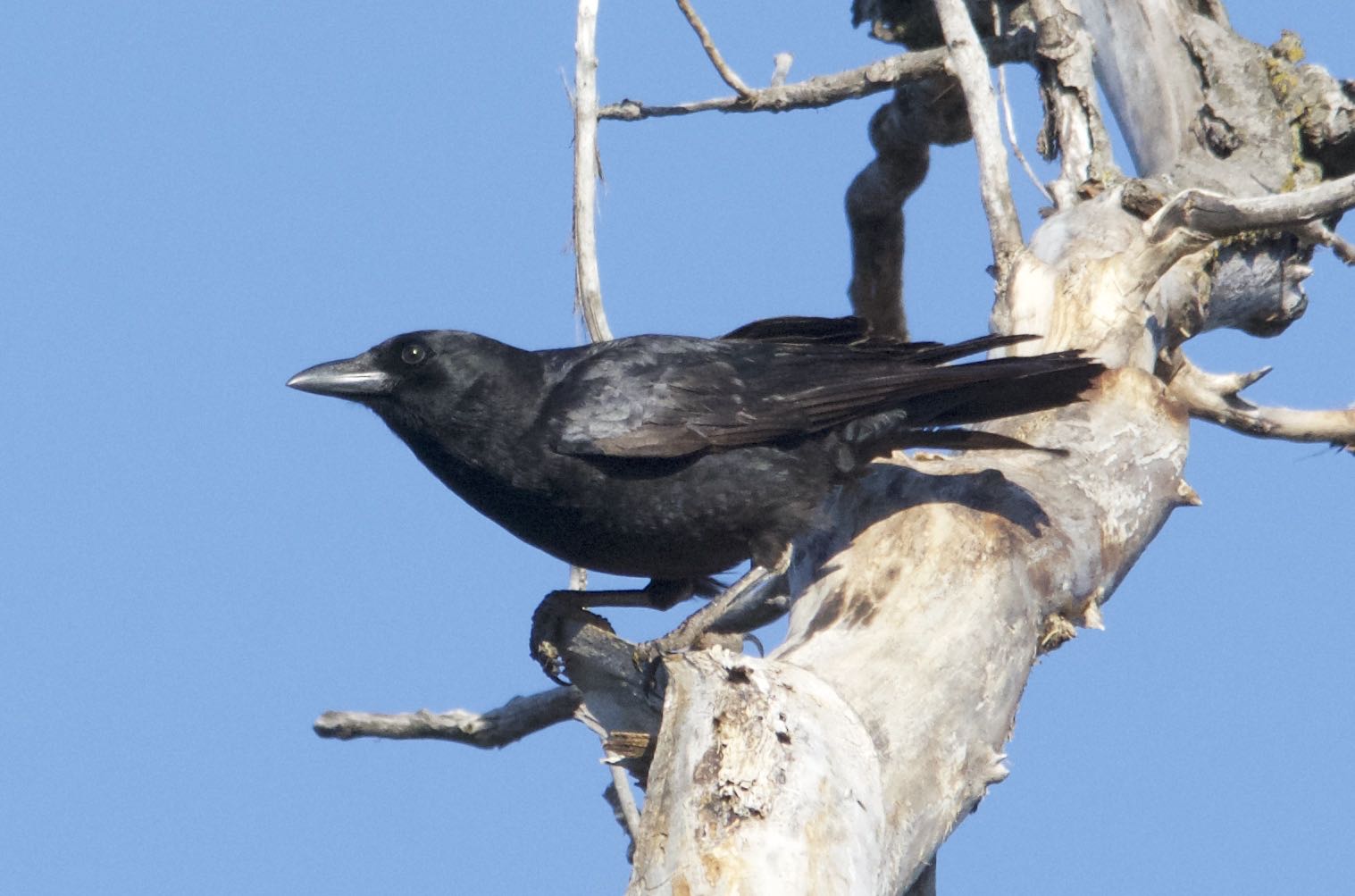
One of the most remarkable birds that many of you are acquainted with is the fascinating Purple Martin, the largest swallow in the United States.
Martins once nested in the wild, but human intervention and attraction led them to depend upon our generosity. These swallows used to be strictly east of the Rockies, but are now moving west to spread their pest control services.
Scouts, or elders, will seek communal areas usually in February or March in Oklahoma, then set up shop soon thereafter and wait for other potential members to fill the space. The group will be unrelated, but many of the young birds will return to the area where they were hatched and raised. The scout probably raised young there the year prior, and sometimes migrants will use the house for a rest stop. The eventual colony could have adults, subadults, and hatch year birds.

Juvenile Purple Martins
Oklahoma 2015
The Purple Martin Conservation Association keeps excellent records on when scouts arrive all over the country, and all landlords and enthusiasts are invited to complete a survey to improve records at https://www.purplemartin.org/research/88/purple-martin-survey/
We are grateful for our birds on Boomer Lake in Stillwater, OK, as they are some of the best pest control specialists. If anyone has martin houses, they will eradicate mosquitoes, gnats, no-see-ums, and many other undesirable insects. The key is to never use pesticides around these birds or any others. If planting trees, shrubs, or other native plants in your area, also keep herbicides out of the equation. These chemicals kill birds, bats, bees, and other pollinator species.

Adult Female Purple Martin, 2015
There are roosts in downtown Tulsa where martins will assemble from mid-June to early September and have been doing so for many years. The roosts number into five figures until the birds head south, usually to Mexico or South America. Most of them return to Brazil.
The Purple Martin Conservation Association will provide advice on the website for the best places to set up apartment houses and gourds, which need to be near water and in open areas to keep predators at bay. Baffles are also necessary to have on the posts to keep snakes, raccoons, and other egg- and nestling-eating animals away.
During the early spring of 2018, while monitoring Boomer Lake for birds, what martins had arrived were creating a ruckus and two were over my head. Upon soon approaching one of the many houses, a Cooper's Hawk was atop it, which was chased away. Wouldn't you know a few days later, the resident swallows, removed it themselves, hot on its tail. To my knowledge, the hawk never returned. They are quick studies, which should keep this species well qualified in survival techniques.

Adult Male Purple Martin, 2015