Friday, June 22, 2018

Thursday, June 21, 2018
Starring the Cliff Swallow

Barn Swallow

Cliff Swallow

Cliff Swallows including recently fledged

More Cliff Swallows In Flight

Ditto

Ditto

Adult and Juvenile Cliff Swallows

Ditto
06-18 and 06-19-18
Last month when we visited Wichita Mountains National Wildlife Refuge, my mind was made up that this was going to be the year that Cliff Swallows would be part of my photo lineup.
Swallows are some of the most challenging to photograph, especially the Cliff Swallows, as they rarely are at rest. With this being the end of fledglings, it was the most logical time to make this attempt and succeed.
It still was not terribly easy, but the bonus was getting shots of the fledglings, too.
You may have heard that swallow feet are very tiny and rudimentary, which is true in the cases of some of them. For those that don't perch on their feet much, muscles will atrophy and lose their strength.
Take as close a look at the feet of these birds as possible, and you'll noticed that they appear to be quite small for their size. You'll notice the young ones clinging to the wall of the bridge in order to keep purchase. That could be the most workout that those little feet will get.
Soon, I will choose a grouping of photos to include all the swallows in my photo gallery so that you might observe some of this family of birds, the Hirundinidae.
I still have yet to photograph the Bank and Cave Swallows, so wish me luck. It just might happen eventually and when it does, you'll be the first to know
Tuesday, June 19, 2018
Life In the Breeding Season Lane at Boomer Lake
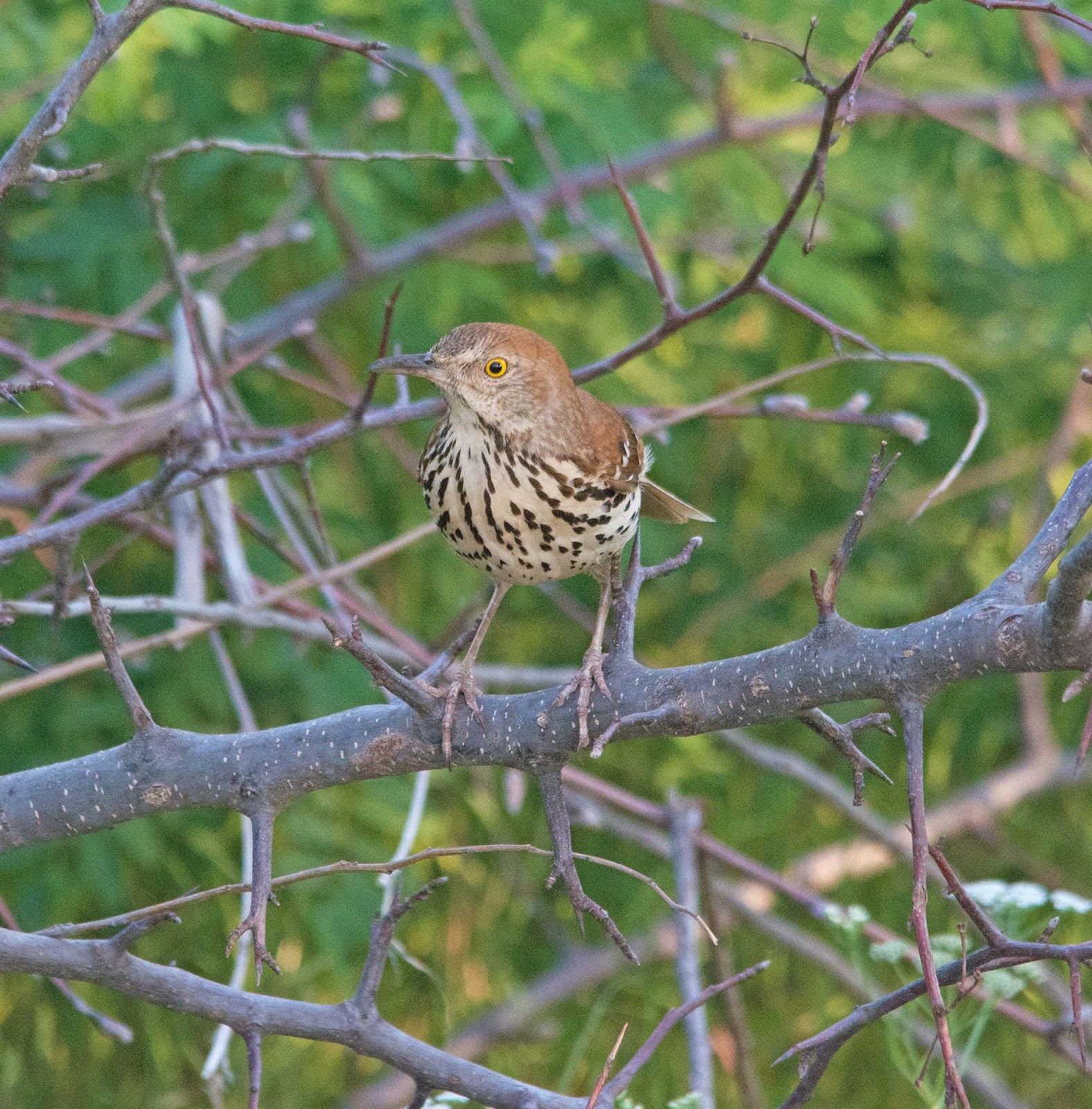
Brown Thrasher

Ditto

Male Great-tailed Grackle and Fledgling

Great-tailed Grackle Fledgling

Green Heron Adult

Eastern Phoebe

American Robin

Barn Swallow

Red-winged Blackbird
First Half June 2018
There has been a great deal of activity this year, not that there was appreciably less last year, BUT there were less birds. Every year, though, some species tend to outweigh others, and this year is no different.
Some species arrived a little earlier, set up at nesting sites, but didn't begin nesting until the usual time. Other species began nesting right away and lost clutches due to a spring cold snap, but the important thing is that they tried again.
With our earth heating up as it is, it is going to be trial and error, especially when it comes to birds that has a relationship with water, namely shores and beaches, as their food supply is drifting northeast where it is cooler.
This is a small sample of breeding birds and fledglings, as well as nesting birds that are doing their jobs as best they can in a somewhat trying time were they must make adjustments for extra heat and food sources.
All the birds shown are generalist species, not specialists, who will have a more difficult time. Will they survive as time marches on? We'll see, and if they do--like the Greater and Lesser Prairie Chickens and other prairie specialties, they will have to make adjustments, which they are not used to doing.
Like you, I certainly hope that they can.
Monday, June 18, 2018
The Evils of Neonicotinoids and GMO Seeds
For a decade, I have been explaining the problems with pesticides and herbicides. They create runoff into every body of water that there is and there is no stopping them unless you refuse to use them. This is why there is a Dead Zone in the Gulf of Mexico and the hazards are only going to increase. If only you did a blood test to detect these chemicals, you would understand.
The very animals and insects that you are trying to save are only being destroyed by the plants that you are growing in your gardens. You are also doing that to yourselves, if you are eating the vegetables that you grow, too, unless they are heirloom seeds or GMO Free.
Watch the video to get a clear picture of how the EPA is not protecting us, and how Big Ag is calling the shots.
Subscribe to:
Posts (Atom)